Going Fragrance-Free: The Single Highest-Value Clean Beauty Swap
Quick Answer: Look for “fragrance-free” on the label, not “unscented” — unscented products can legally contain masking fragrance to cover a base smell. On an ingredients list, fragrance appears as parfum or fragrance, one word that can legally represent dozens of undisclosed compounds. Essential oils count as fragrance too. Swap leave-on products first (moisturiser, sunscreen), replace things as they run out, and expect a verdict within a few weeks.
If clean beauty had one move with a genuinely good evidence-to-effort ratio, it’s this one.
Fragrance is consistently among the leading causes of cosmetic contact allergy in dermatology patch testing. And unlike most skincare advice, this swap costs nothing extra and requires no new products — you just buy different versions of what you already use.
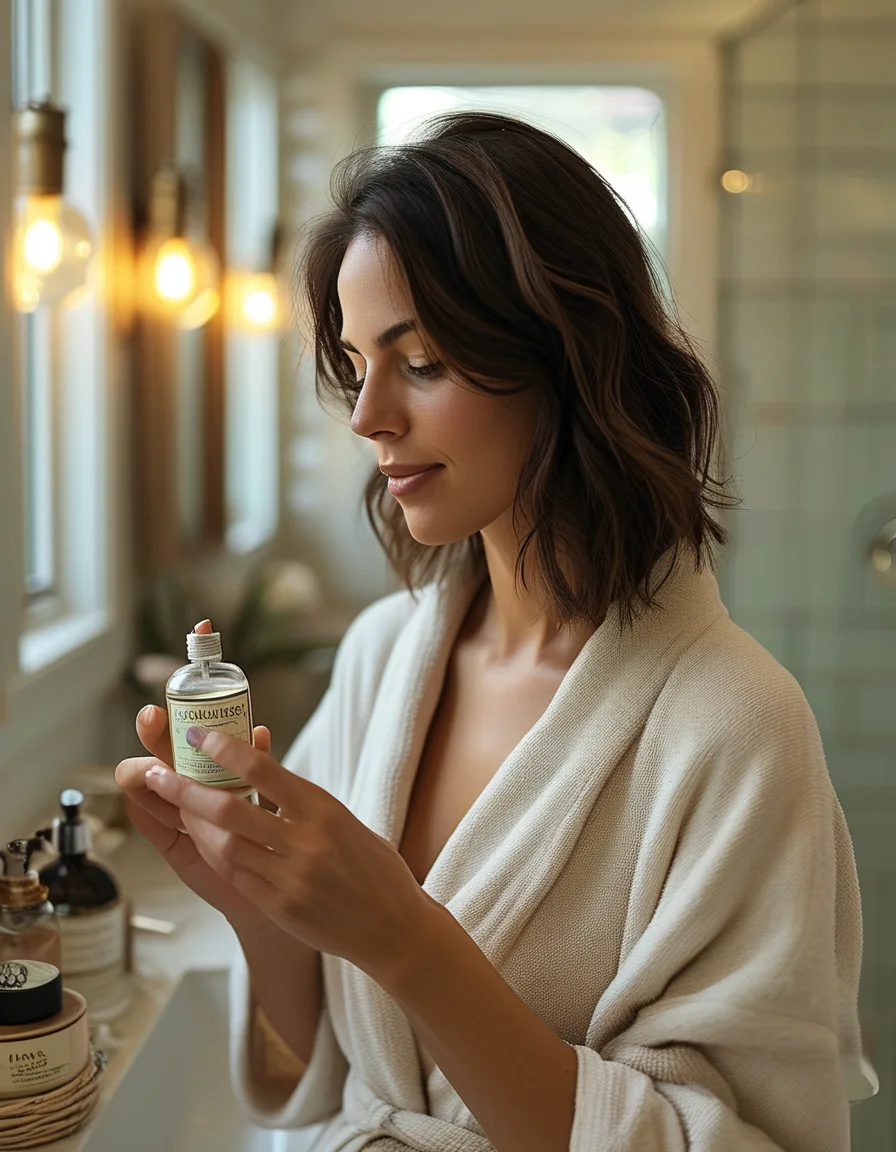

Why Is Fragrance the First Thing to Remove?
Because for reactive skin, subtraction usually beats addition.
The common pattern with sensitive skin is escalation: skin gets irritated, so you buy a soothing serum. Skin stays irritated, so you add a barrier cream. Now you’re using six products and can’t identify which one is the problem.
Fragrance is worth removing first for three reasons:
- It’s the most likely single culprit. Fragrance mix is among the most frequent positive results in standard patch test panels internationally.
- It has no functional benefit for your skin. Actives, humectants, and emollients all do something. Fragrance makes the product smell nice, which matters for whether you enjoy using it and not at all for what it does.
- It’s in almost everything, which means the cumulative exposure across a routine is much higher than any single product suggests.
For the itchy, red, why-is-my-skin-annoyed-today mysteries, removing fragrance is the most productive first experiment there is.
What Are the Label Traps?
Three, and the first one catches nearly everyone.
Trap 1: “Unscented” is not “fragrance-free.” An unscented product can contain masking fragrance — a scent added specifically to cover the smell of the base ingredients. It smells like nothing, which is exactly what makes it deceptive. Look for “fragrance-free” explicitly.
Trap 2: Essential oils are fragrance. Lavender, tea tree, citrus oils, ylang-ylang, and geraniol are all common allergens, and some — like limonene and linalool, which occur in many citrus and floral oils — are on the EU’s list of fragrance allergens that must be individually declared. A botanical source doesn’t change the chemistry. Naturally derived irritation is still irritation, however calming the packaging font.
Trap 3: The ingredient list hides the number. In the EU, UK, US, and most other markets, “parfum” or “fragrance” is a legally protected trade-secret designation that can represent a blend of dozens of individual compounds without listing them. One word, considerable complexity underneath.
What to actually scan for on a label:
- Fragrance / parfum
- Any ingredient ending in -ol that’s clearly a scent: linalool, geraniol, citronellol
- Named essential oils (Lavandula angustifolia oil, Citrus limon peel oil)
- Eugenol, coumarin, benzyl alcohol, benzyl salicylate, limonene

How Do You Actually Make the Switch?
Gradually, and in a specific order.
Swap as products empty, not all at once. Binning a full bottle of moisturiser to make a point costs money and achieves nothing your next empty wouldn’t.
Leave-on products first. These sit on your skin for hours:
- Moisturiser — the biggest single exposure
- Sunscreen — worn daily, all over the face
- Serums and treatments
- Body lotion — often overlooked and applied over a large surface area
Rinse-off products later. Cleansers, shampoos, and body wash have far shorter contact time, so they matter less. Shampoo is worth doing eventually if you get irritation around the hairline or on the upper back.
Timeline: a full transition takes about two to three months at zero extra cost, since you’re replacing things you’d have bought anyway.
When you’ll know: most people who react to fragrance notice a difference within three to four weeks of removing it from leave-on products. Skin turnover means changes aren’t instant.

5 Mistakes Everyone Makes
1. Trusting “for sensitive skin” claims. This phrasing isn’t regulated in most markets. Read the ingredient list regardless of what the front of the bottle says.
2. Changing everything in one week. If your skin improves, you won’t know which change did it. If it gets worse, same problem. One category at a time.
3. Forgetting laundry detergent and fabric softener. Your pillowcase spends eight hours against your face every night. This is a common blind spot and an easy fix.
4. Assuming natural means non-irritating. Essential oils are among the more common causes of contact allergy in “clean” products specifically. Botanical is not a safety category.
5. Giving up after ten days. Skin takes several weeks to show the result. Judging at day ten is judging too early.
What Will You Actually Notice?
Honest answer: it varies a lot by person.
If you’re fragrance-sensitive, the common reports are less general tightness, fewer episodes of random redness, and calmer skin around the eyes — where the skin is thinnest and fragrance exposure is often highest from eye creams and cleansers.
If you’re not fragrance-sensitive, you may notice nothing at all, and that’s a completely legitimate result. Fragrance isn’t dangerous for people who don’t react to it, and there’s no need to feel obliged to remove it from a routine that’s working.
The odd side effect nearly everyone reports: realising how loud scented products were once they’re gone. Products you’d never have described as strongly scented turn out to have been quite assertive, and going back to them is a small shock.
Your perfume can stay. It just moves to clothes and pulse points rather than your face and neck — which is where it belongs anyway, since fragrance plus sun exposure can occasionally cause pigmentation on the neck.
When to see a professional: if skin irritation persists after removing fragrance, if you develop a rash that spreads or blisters, or if you have ongoing eczema or dermatitis, see a GP or dermatologist. Patch testing is the only way to actually identify what you’re reacting to, and it’s a straightforward clinical procedure rather than something to guess at over months of trial and error.
Frequently Asked Questions
Is fragrance in skincare actually harmful, or just irritating for some people?
For most people it’s neither harmful nor irritating — it’s simply unnecessary. For the subset who develop fragrance contact allergy, it causes genuine dermatitis, and repeated exposure to an allergen you’ve become sensitised to tends to make reactions worse over time rather than better. That’s the reason dermatologists commonly recommend avoiding it for reactive skin specifically, rather than for everyone.
Are “natural fragrance” and “essential oil blend” any better?
Not meaningfully, from an irritation standpoint. Some of the most common fragrance allergens in patch testing — limonene, linalool, geraniol — are naturally occurring components of essential oils. The EU requires several of them to be declared individually precisely because of their allergen status. Natural describes the source, not the effect on skin.
Do I need to replace my makeup too?
Eventually, and it’s lower priority than skincare. Foundation and concealer sit on skin for a long time, so those are worth switching when they run out; powder products and things worn briefly matter less. If you’re getting irritation specifically around the eyes, mascara and eye pencils are worth checking early, since that skin is the most reactive on the face.
TL;DR:
- Look for “fragrance-free”, not “unscented” — unscented can contain masking fragrance
- On the label, watch for: parfum/fragrance, limonene, linalool, geraniol, named essential oils
- Essential oils count as fragrance. Botanical isn’t a safety category
- Switch leave-on products first: moisturiser, sunscreen, serums, body lotion
- Replace as things empty — full transition in 2–3 months at zero extra cost
- Don’t forget laundry detergent; your pillowcase gets eight hours a night
- Expect a verdict in 3–4 weeks. If irritation persists, see a GP or dermatologist for patch testing
It’s the least Instagrammable and most dermatologist-endorsed move in clean beauty — and cranky skin has been requesting it for years.
Keep Reading
This article is for general informational and styling purposes only. Fit, sizing, and product availability may vary.