Clean Beauty Without the Fear-Mongering: A Sensible Beginner's Guide
Clean beauty is simultaneously one of the decade’s biggest consumer shifts and one of its murkiest labels — a term with no legal definition, marketed with equal parts genuine ingredient science and manufactured panic. The sensible position lives between the extremes: some ingredient caution is reasonable, most chemical fear-mongering is not, and clean is a marketing word until you read the label yourself. Here is the level-headed beginner’s guide — swaps worth making, hype worth skipping, and how to read past the leaves on the packaging.
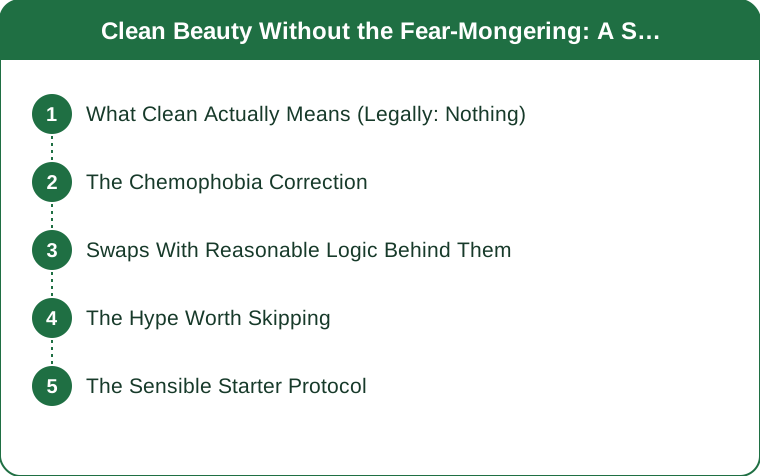
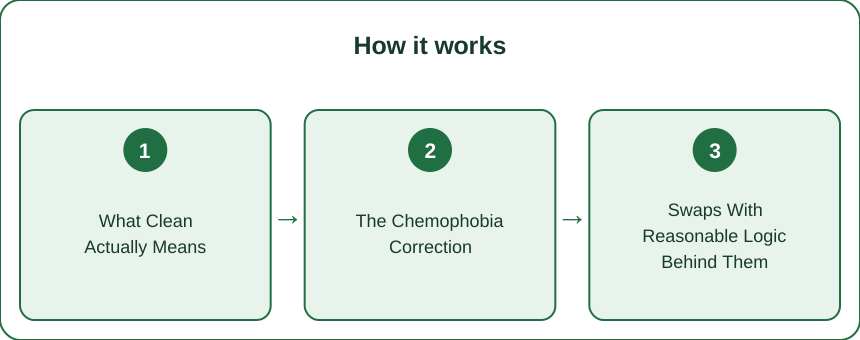
What Clean Actually Means (Legally: Nothing)
The foundational fact: clean, natural and non-toxic have no regulated definitions in cosmetics — any brand can print them, and the green-leaf aesthetic is a design choice, not a certification. What exists instead: real certifications with actual standards (organic seals, cruelty-free logos with teeth), retailer-defined banned-ingredient lists (better than nothing, still marketing-adjacent), and the only universal tool — the ingredient list itself. Rule one of clean beauty: the front of the bottle is advertising; the back is the product. Everything useful in this guide happens on the back.
The Chemophobia Correction
The necessary myth-busting: chemical-free is impossible (water is a chemical), natural does not mean safe (poison ivy is deeply natural; many plant extracts are top allergens) and synthetic does not mean dangerous (lab-made ingredients are often purer and more consistent than botanical extracts). The dose-and-context principle governs actual toxicology, and cosmetic ingredients are used at fractions of the concentrations that generate scary headlines from industrial studies. A sensible clean-beauty practice is not fleeing chemistry — it is preferring well-tested ingredients at sensible concentrations from brands that disclose rather than obscure.
Swaps With Reasonable Logic Behind Them
Where ingredient caution has genuine footing: fragrance/parfum is the ingredient list’s black box (a single word legally covering dozens of undisclosed compounds — and the leading cause of cosmetic contact allergies; fragrance-free is the single highest-yield clean swap, especially for sensitive skin), certain preservative and sunscreen debates justify preference — not panic — for alternatives if you like erring conservative, and simple formulas beat twenty-ingredient cocktails for reactive skin by pure probability. Note the tone: these are preferences with reasoning, not evacuations from danger. Anyone selling the evacuation version is selling.
The Hype Worth Skipping
The clean-beauty tax to politely decline: detox skincare (skin does not detox through products; the liver remains unimpressed by charcoal masks), crystal-infused anything, preservative-free water-based products (that is not purity — that is a microbiology experiment with a jar lid), fear-priced dupes (a $60 clean moisturizer with the same core formula as the $12 one is charging you for the leaf graphics), and the endless-toxin listicle economy that keeps engagement high and context absent. The irony worth noticing: aggressive clean marketing and aggressive chemical marketing are the same technique — fear and promise — pointed in opposite directions.
The Sensible Starter Protocol
Clean beauty, operationalized without anxiety: simplify first (fewer products is the cleanest routine of all — cleanser, moisturizer, sunscreen, plus one treatment beats twelve-step everything), go fragrance-free where skin is sensitive, learn to skim ingredient lists (first five ingredients are most of the formula; apps and databases help but carry their own alarmism — use them as input, not verdict), patch-test new botanicals exactly as you would synthetics, and never sacrifice the proven pillars on clean’s altar: sunscreen and evidence-backed actives (retinoids, vitamin C) have decades of safety-and-results data that no leaf logo outranks. Clean, at its best, means informed. That version is free.
Clean beauty, decoded: an unregulated label wrapped around a reasonable instinct — know what you are putting on your skin. Skip the fear economy, keep the sunscreen, go fragrance-free if sensitive, prefer short honest ingredient lists, and let certifications and disclosures — not leaf graphics — earn your trust. The cleanest thing in beauty was never an ingredient list anyway. It is a consumer who reads.
Keep Reading
This article is for general informational and styling purposes only. Fit, sizing, and product availability may vary.