How to Actually Read a Cosmetic Label: Beyond the Front-of-Bottle Promises
The front of a beauty bottle is advertising; the back is the actual product. Label literacy — the ingredient-order rule, the marketing-word decoder, the concentration clues — turns the confusing fine print into an honest conversation. The course, in four lessons.
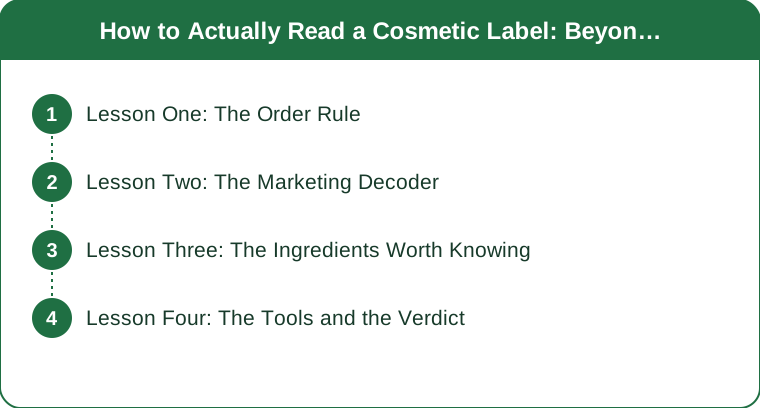
Lesson One: The Order Rule
The list’s grammar: ingredients descend by concentration (the first five ingredients ARE the product — everything after the fragrance or the 1%-line preservatives is present in small amounts), the water-first normality (aqua leading is standard for lotions — not a scam, just chemistry), the hero-ingredient audit (the collagen or vitamin C the front of the bottle shouts about, found 18th on the list, is a marketing dusting — the position tells you the dose better than the label copy), and the short-list heuristic (fewer ingredients isn’t automatically better, but it makes auditing honest — the sensitive-skin crowd’s preference for short lists is about traceability, not purity).
Lesson Two: The Marketing Decoder
The unregulated words: ‘clean’, ‘natural’ and ‘non-toxic’ have no legal definition in most markets (they mean whatever the brand’s marketing team decided — the word on the front constrains nothing in the back), ‘chemical-free’ is scientifically meaningless (water is a chemical — the phrase signals marketing over chemistry every time), ‘dermatologist-tested’ means a dermatologist was involved in some test (not that it passed, not what was tested), and the genuinely regulated tier (‘fragrance-free’ and SPF claims carry real definitions in most markets — the words worth trusting are the boring ones).
Lesson Three: The Ingredients Worth Knowing
The short vocabulary that covers most decisions: the fragrance line (‘parfum/fragrance’ is the most common irritant in cosmetics — the sensitive-skin population’s first suspect; ‘fragrance-free’ beats ‘unscented’, which can hide masking scents), the workhorse-recognition tier (glycerin, ceramides, niacinamide, the retinoid family — spotting the proven performers tells you if the product walks its talk), the preservative peace (preservatives keep products safe — the preservative-free water-based product is a microbiology experiment, not a virtue), and the personal-list habit (YOUR known irritants, kept in the phone — the patch-test findings compiled into a screening tool).
Lesson Four: The Tools and the Verdict
The outsourcing options: the ingredient-checker apps and databases (scan the barcode, get the breakdown — imperfect but faster than a chemistry degree; use them as a first pass, not a verdict), the concentration honesty (labels hide percentages — the ‘contains niacinamide’ claim spans useless-to-excellent; brands that publish percentages are answering the question others dodge), and the verdict framework (the product judged by its first five ingredients, its fragrance line and your personal-irritant list — three checks, thirty seconds, most decisions made). The back of the bottle was always the truth — it just needed a translator.
First five are the product, front words are unregulated, fragrance is suspect one, apps do the first pass. Label literacy takes four lessons — and the marketing loses its power at lesson one.
Keep Reading
This article is for general informational and styling purposes only. Fit, sizing, and product availability may vary.