Do Clean Beauty Products Expire Faster? What That Little Jar Symbol Really Means
Quick Answer: Often, yes - clean formulas typically use milder preservative systems with narrower protection, so their open-jar lifespans run shorter and their storage rules matter more. The open-jar symbol (a number like 6M or 12M) counts from first opening, not purchase. Water-based products are the vulnerable ones; oils and balms do not grow microbes but do go rancid. And after a summer of bathroom heat, late August is exactly the moment to audit the shelf.
The jar was expensive, it is only half used, and it smells slightly like crayons now. The question of whether clean products die young is really a question about preservatives - what they do, what replaces them, and what that trade costs you in months. Here is the honest math, and the two-minute test for everything you own.

Do preservative-light formulas really go off sooner?
Frequently yes - and understanding why turns you into a better judge of your own shelf.
Preservatives exist because water is habitable. Any product containing water - creams, lotions, serums, gels - is a potential home for bacteria, yeast, and mold, especially once fingers and air get involved. Conventional preservation uses well-studied broad-spectrum systems that guard against all three for years. Clean formulations, avoiding several of those ingredient families, rely on alternatives - organic acids, certain alcohols and glycols, ferments, packaging tricks - that are effective but often narrower in what they cover and more sensitive to pH, temperature, and contamination. The practical result is a product that is perfectly safe as designed, with less margin for abuse and a shorter confident lifespan once open.
Anhydrous products play a different game entirely. Face oils, balms, and butters contain no water, so microbes cannot flourish - their enemy is oxygen. Oils oxidize: they go rancid, the way old nuts do, and plant oils rich in delicate fatty acids get there faster than stable synthetics. Rancid is not moldy, but oxidized oils are irritating to skin and smell unmistakably of old crayons or stale nuts.
So the risk map reads: water-based clean products - watch for microbial spoilage, respect the open-jar window strictly. Oil-based products - watch your nose for rancidity, guard against heat and light. Powders - lowest risk, longest life. That triage does more for you than any single expiration date printed anywhere.
How do you read the dates and symbols?
The packaging tells you more than most people ever decode.
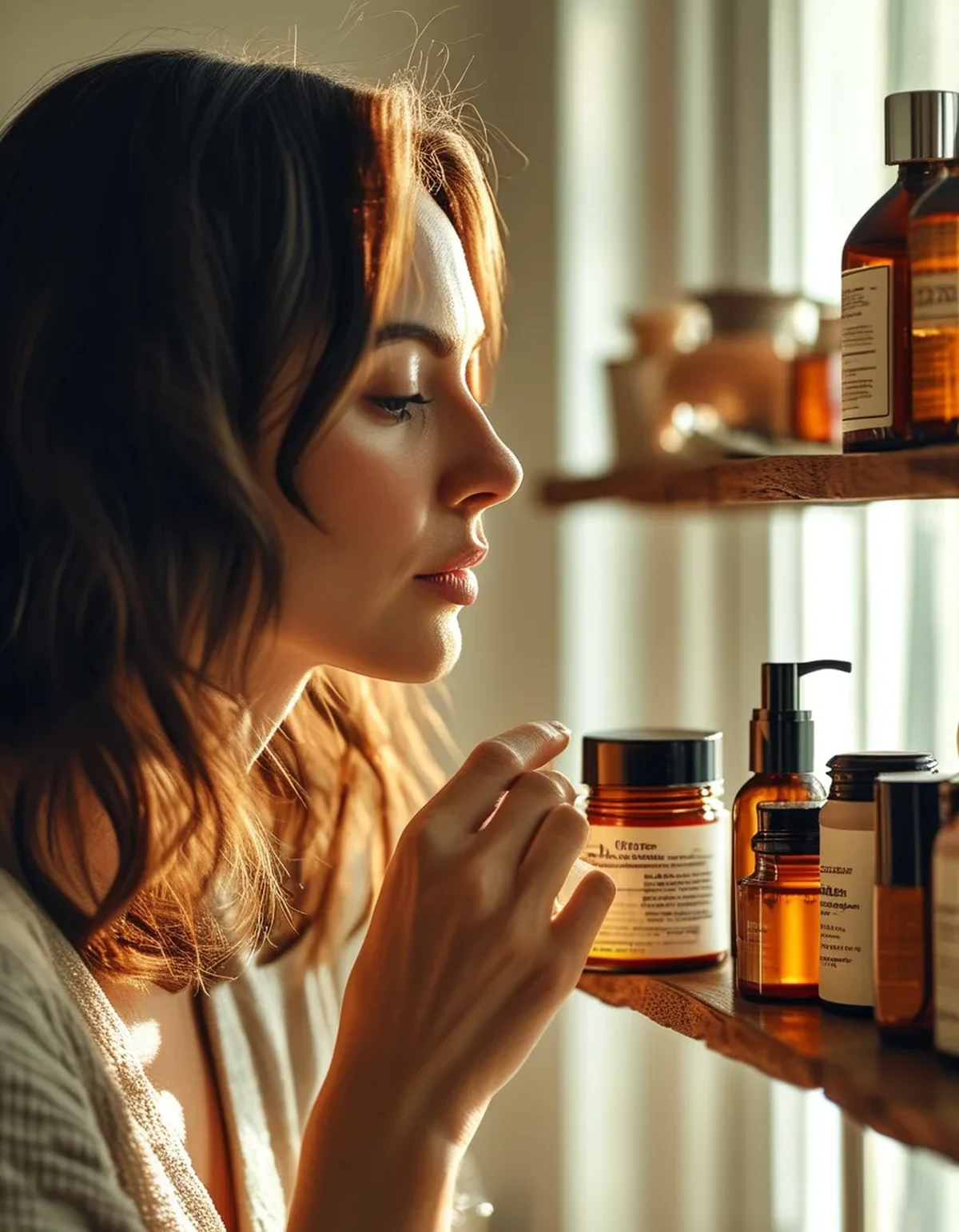
The open-jar symbol is the important one. A small drawing of an opened jar with a number - 6M, 12M, 24M - is the period-after-opening: how many months the maker stands behind the product once the seal breaks. The clock starts at first use, not at purchase, which is why a marker-pen dot with the opening month on the base of every new product is the single most useful habit in this entire article.
Some products carry a hard expiration date instead - common where regulations require it, and standard on sunscreen, whose active protection genuinely degrades. A sunscreen past its date is not a judgment call; SPF you cannot verify is SPF you do not have.
Batch codes are the fallback. That embossed string of letters and numbers identifies the production run; brand websites and checker tools can often translate it into a manufacture date when no other date exists.
And the calendar interacts with your bathroom. Heat and humidity accelerate both microbial growth and oxidation, and a steamy shower shelf in a hot summer is a small stress test run daily. A product that spent June through August in a hot bathroom - or worse, a car, a beach bag, a windowsill - has aged faster than its symbol assumed. This is why an end-of-summer audit earns its place: the collection has just been through the hardest quarter of its year, and the 12M on the jar was written for kinder conditions.
5 Signs a Product Has Turned - and 2 That Are Harmless
1. The smell changed. The most reliable sensor you own. Rancid-crayon or old-nut notes mean oxidized oils; sour, yeasty, or just off means microbial trouble in a water-based formula. Trust the nose over the date - in both directions.
2. Separation that will not shake back. Many clean emulsions separate slightly and re-blend with a shake. A product that stays split, weeps a layer of water in the jar, or has gone curdled in texture is done.
3. Color drift. Vitamin C serums are the famous case - pale gold is fine, deep amber-brown means the active has largely oxidized and the product is now irritation with no upside. Any dramatic darkening or mottling in creams is a retirement notice.
4. Texture gone grainy, gluey, or thin. Emulsions that were silky and are now gritty or stringy have had a structural failure - preservation and stability tend to fail together.
5. Anything visibly growing. Specks, fuzz, or film in the jar or around the lid threads. No sentimentality; it goes.
Harmless number one: minor pigment settling in mineral makeup and some tinted products - a stir or shake and it is uniform again.
Harmless number two: fading natural scent. Essential-oil and botanical fragrances quiet down with months; scent getting weaker is fine. Scent turning different - sour, waxy, sharp - is the signal that matters.
How do you make products last their full window?
Shelf life is half formula, half your habits - and the habits are free.
Choose packaging like it matters, because it does. Pumps and closed tubes expose product to almost no air or fingers; open jars expose it to both at every use. Given the choice in a clean line, the pump version of the same formula will outlast the jar version in practice. For jars you love, a tiny spatula - or a clean butter knife, honestly - keeps fingers out of the pot, which is the main contamination event.
Store cool, dark, and dry. Which disqualifies the two most popular skincare locations in any home: the shower shelf and the sunny windowsill. A cabinet or drawer outside the bathroom steam zone adds real months. Nothing lives in the car, ever - a single hot afternoon in an August car is weeks of aging.
Keep water out. Wet hands in a jar, or storing products where shower spray reaches, dilutes the preservative system on top of everything else it does.
Buy at the pace you use. The three-for-two stockpile of gentle-preservation products is a false economy if jars two and three sit opened-adjacent in a warm bathroom for a year. One open product per category, sized to finish inside its window.
And be strict where the stakes are highest. Eye-area products earn the shortest leashes - mascara three months, liner not much longer - because the eye is where contaminated product does real harm. Anything used on broken skin, and all sunscreen, follows dates without negotiation. If a product has caused stinging, new redness, or breakouts and it is past or near its window, retire it and note the pattern - and see a professional for reactions that persist. This is general information, not medical advice.
FAQ: Clean Beauty Shelf Life, Answered
How long do clean beauty products last after opening?
Follow the open-jar symbol - commonly 6 to 12 months for water-based clean formulas, longer for anhydrous balms and powders. Date the base at first opening, and let smell and texture overrule the number in either direction.
Do natural products without preservatives exist?
Water-based ones, effectively no - anything with water needs a preservation system to be safe, and clean lines use alternative systems rather than none. Truly preservative-free products are typically waterless: oils, balms, powders.
Can expired skincare hurt you?
It can: contaminated water-based products can cause breakouts and infections - the eye area is the real risk zone - and oxidized oils and degraded actives commonly irritate. Expired sunscreen fails silently, which is its own harm.
Where should I store skincare in summer?
A cool, dark, dry cabinet outside the shower’s steam radius. Heat is the great accelerant - and after a hot summer, assume everything aged faster than its label planned and run a quick smell-and-texture audit.
TL;DR:
- Clean preservation systems are milder and narrower - shorter open-jar lifespans and stricter storage are the honest trade.
- The jar symbol counts from first opening: write the date on the base, every time.
- Water-based products spoil microbially; oils go rancid; powders barely care - triage by category.
- Pumps over jars, cabinet over shower shelf, one open product per category, and a hard line on sunscreen and eye products.
After the hottest quarter of the year, give the shelf two minutes of sniffing and honesty. The products that survive earned it - and the ones that did not were already charging your skin rent.
Keep Reading
This article is for general informational and styling purposes only. Fit, sizing, and product availability may vary.