The Preservative-Free Trap: When 'Clean' Beauty Actually Increases Risk
Preservative-free gets marketed as one of the clearest signals of ‘clean’ beauty, and it’s one of the places the clean beauty framing actually works against genuine safety — a preservative-free product carries real, specific risks that a well-formulated preserved product doesn’t. Here is why removing preservatives entirely isn’t the safety win it sounds like, and how to tell genuinely safer formulation from marketing.
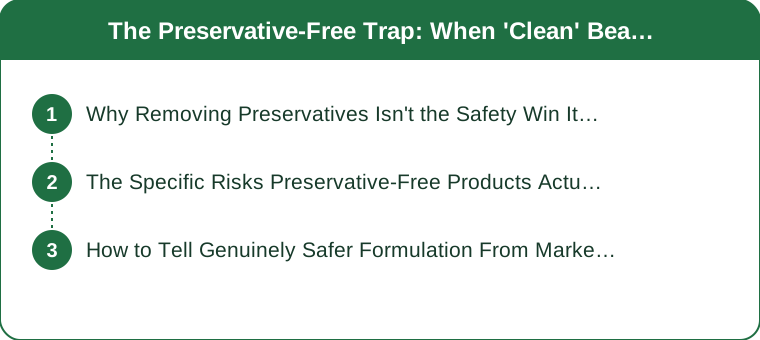
Why Removing Preservatives Isn’t the Safety Win It Sounds Like
The actual function preservatives serve: the preservatives-exist-specifically-to-prevent-microbial-growth (the core function of a preservative system being to prevent bacteria, mold and fungus from growing in a water-containing product over its shelf life and repeated use — the this-is-a-real-safety-function-not-an-optional-add-in), the the-greenwashing-decoder-framing-often-conflates-preservatives-with-harsh-or-harmful-ingredients (the broad ‘preservative-free’ marketing language borrowing credibility from legitimate concerns about a small number of specific harsh preservatives, then applying that concern to the entire preservative category as if it were uniformly problematic, per the greenwashing-decoder-guide logic — the a-narrow-legitimate-concern-gets-generalized-into-a-broad-marketing-claim), the the-any-product-containing-water-is-a-genuine-microbial-growth-risk-without-preservation (the water-based formulas specifically, which describes most skincare, being genuinely vulnerable to contamination without some functioning preservation system, regardless of how ‘natural’ the other ingredients are — the water-content-not-ingredient-naturalness-is-what-creates-the-actual-risk), the the-natural-doesnt-mean-antimicrobial (the assumption that natural or plant-derived ingredients are inherently self-preserving being largely unfounded, since very few natural ingredients provide reliable, broad-spectrum antimicrobial protection on their own — the natural-ingredients-mostly-dont-replace-a-real-preservative-systems-function), the the-modern-preservative-systems-are-heavily-safety-tested-specifically-because-of-their-direct-skin-contact-use (the preservatives used in leave-on skincare being among the most rigorously tested ingredient categories precisely due to their function and prevalence, which cuts against a blanket ‘preservatives are the dangerous ingredient’ framing — the the-most-scrutinized-ingredient-category-isnt-automatically-the-most-dangerous-one), and the reframe (the preservative-free framing as a marketing simplification that skips over the real, specific safety function preservatives serve, rather than a genuine, evidence-based safety upgrade).

The Specific Risks Preservative-Free Products Actually Carry
What can actually go wrong: the bacterial-and-mold-contamination-during-normal-use (the repeated hand or applicator contact with a water-based product over weeks of normal use being a realistic contamination pathway that an inadequate or absent preservative system can’t defend against — the normal-repeated-use-is-exactly-when-contamination-risk-builds), the the-diy-and-small-batch-preservative-free-products-carry-especially-elevated-risk (the smaller-batch or DIY preservative-free formulations, per the diy-beauty-what-works-guide logic, often lacking the more rigorous stability and safety testing larger, established formulations undergo, compounding the underlying risk — the smaller-scale-preservative-free-products-often-have-less-testing-behind-them-too), the the-contaminated-product-used-near-the-eyes-or-on-broken-skin-carries-real-infection-risk (the risk being more than theoretical — a genuinely contaminated product applied to sensitive or compromised skin areas can cause real infections, particularly relevant to products used around the eyes — the this-is-a-genuine-not-hypothetical-safety-concern), the the-shortened-effective-shelf-life-often-isnt-clearly-communicated (the preservative-free products frequently needing to be discarded much sooner than a typical shelf-stable product, a limitation that isn’t always clearly flagged on packaging or marketing — the the-real-use-window-is-often-shorter-than-implied), the the-visible-spoilage-signs-dont-always-appear-before-contamination-is-already-a-risk (the product not necessarily smelling or looking obviously ‘off’ by the time meaningful microbial growth has occurred, meaning visual inspection alone isn’t a fully reliable safety check — the you-cant-always-see-or-smell-the-problem-before-its-already-there), and the frame (the actual risks as bacterial or mold contamination during ordinary repeated use, elevated risk in less-tested small-batch formulations, real infection risk especially near eyes or compromised skin, an often-unclear shortened shelf life, and contamination that isn’t always visually detectable — genuine, specific risks rather than a vague general concern).
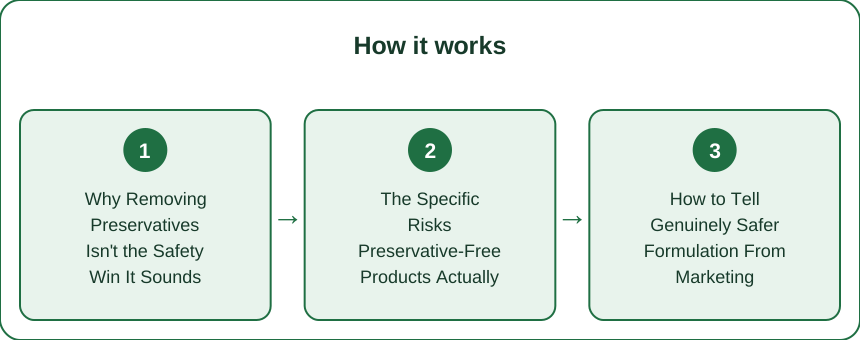
How to Tell Genuinely Safer Formulation From Marketing
What actually matters: the look-for-a-thoughtfully-chosen-preservative-system-not-its-absence (the presence of a well-selected, appropriately dosed preservative system being a positive formulation signal, not a red flag, especially in any water-based leave-on product — the a-good-preservative-choice-is-a-quality-signal-not-a-warning-sign), the the-research-the-specific-preservative-rather-than-reacting-to-the-category-broadly (the evaluating a specific named preservative ingredient on its own actual safety data, rather than treating the entire broad category of ‘preservatives’ as equally concerning, per the reading-cosmetic-labels-guide logic — the evaluate-specific-ingredients-not-broad-scary-sounding-categories), the the-check-actual-shelf-life-and-use-by-guidance-not-just-marketing-claims (the looking specifically at how long a product is actually recommended to be used after opening, a more concrete safety indicator than a ‘preservative-free’ badge on the front label — the the-use-by-window-tells-you-more-than-the-marketing-claim-does), the the-anhydrous-oil-only-products-are-a-genuine-exception-worth-knowing (the products with no water content at all — pure oils, certain balms — genuinely needing little to no preservative, since the underlying microbial-growth risk that preservatives address doesn’t really apply to them, per the clean-beauty-swaps-worth-it-guide logic — the anhydrous-products-are-the-legitimate-exception-not-every-product-claiming-preservative-free), the the-favor-brands-that-explain-their-formulation-reasoning-rather-than-just-making-the-claim (the a brand willing to explain why and how a product is safely preserved, or why it doesn’t need to be, generally reflecting more genuine formulation transparency than one relying purely on a preservative-free marketing badge — the explanation-over-just-the-claim-signals-real-transparency), and the frame (the way to actually tell the difference as looking for a thoughtfully chosen preservative rather than its absence, researching the specific ingredient rather than reacting to the category, checking real use-by guidance over marketing claims, recognizing anhydrous products as the genuine legitimate exception, and favoring brands that explain their formulation choices — genuine safety signals rather than a marketing shortcut).
Preservative-free marketing borrows credibility from legitimate concerns about a small number of specific harsh preservatives and then applies that concern to the entire preservative category, even though preservatives exist specifically to prevent bacterial, mold and fungal growth in water-containing products, and very few natural ingredients reliably replace that antimicrobial function on their own. The real risks of going preservative-free include contamination during completely normal repeated use, elevated risk in less-tested small-batch or DIY formulations, genuine infection risk especially for products used near the eyes or on compromised skin, an often unclearly communicated shortened shelf life, and contamination that isn’t always visible or detectable by smell before it’s already a problem. Telling genuine safety from marketing means looking for a thoughtfully chosen, appropriately dosed preservative system as a positive signal rather than a warning sign, researching a specific named preservative on its own safety data rather than reacting to the broad category, checking actual use-by guidance rather than trusting a front-label claim, recognizing that truly anhydrous oil-only products are the legitimate exception where little preservation is needed, and favoring brands willing to explain their formulation reasoning rather than just making the claim.
Keep Reading
This article is for general informational and styling purposes only. Fit, sizing, and product availability may vary.