Which Clean Beauty Ingredients Are Actually Pregnancy-Safe? A Straightforward Breakdown
Quick Answer: “Clean” labeling has nothing to do with pregnancy safety — ingredients to actually avoid during pregnancy include retinoids, salicylic acid above 2%, hydroquinone, and certain essential oils, regardless of whether the product markets itself as clean or natural.
A product being labeled “clean” tells you about its formulation philosophy, not whether it’s safe to use while pregnant — those are two completely separate questions, and clean beauty marketing rarely draws that distinction clearly.
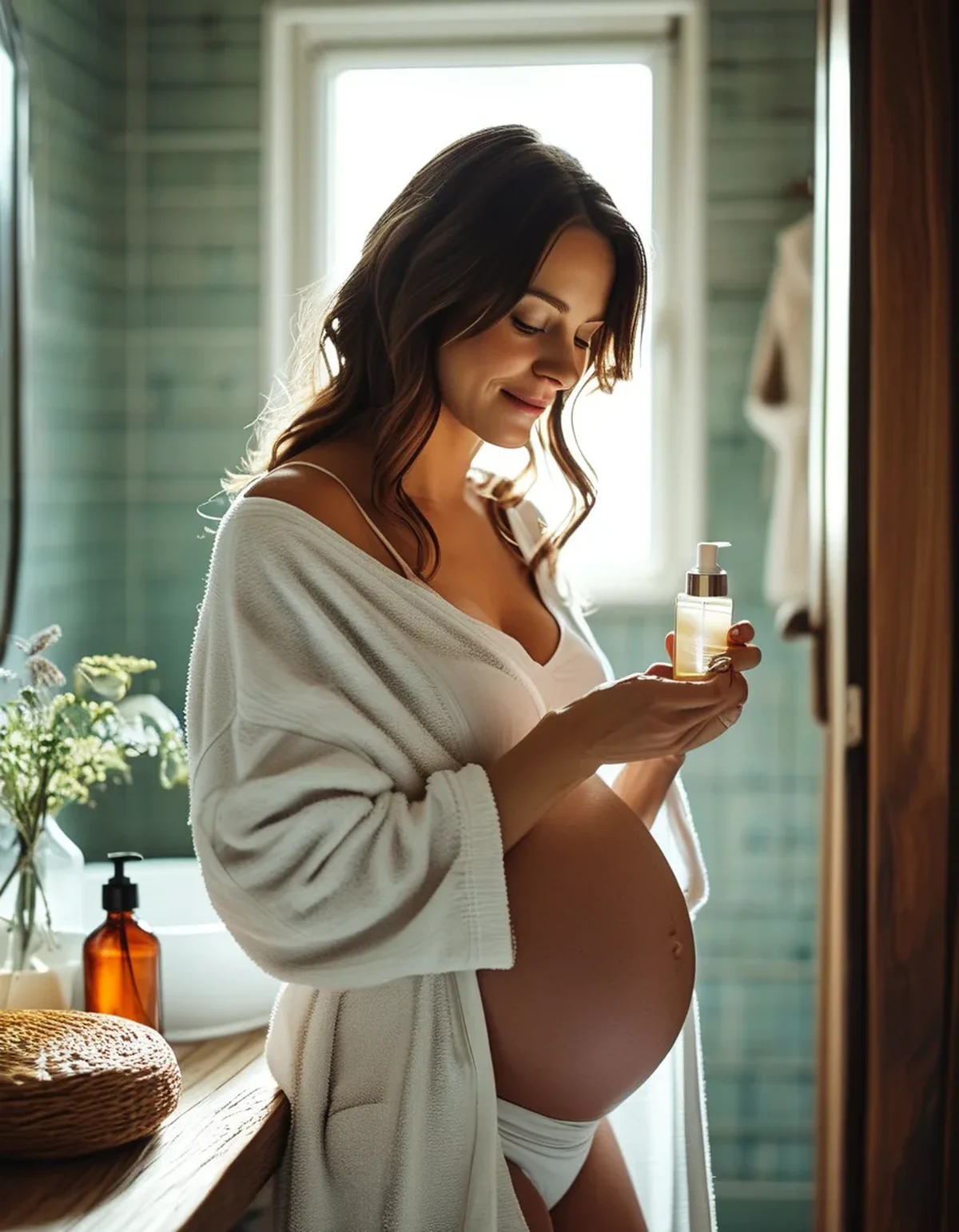
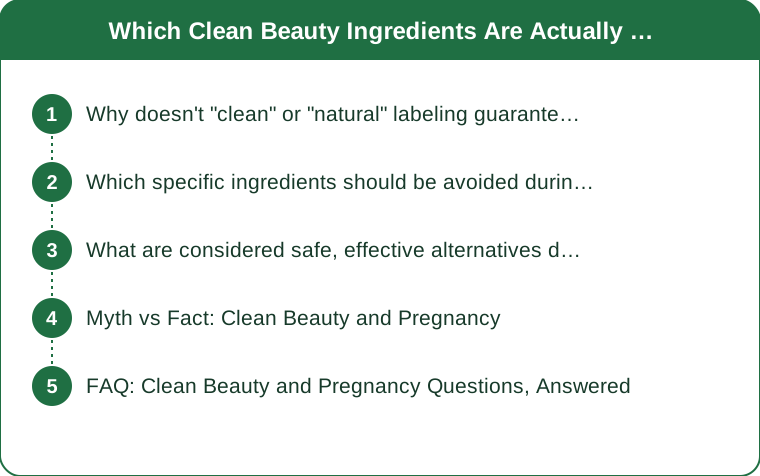
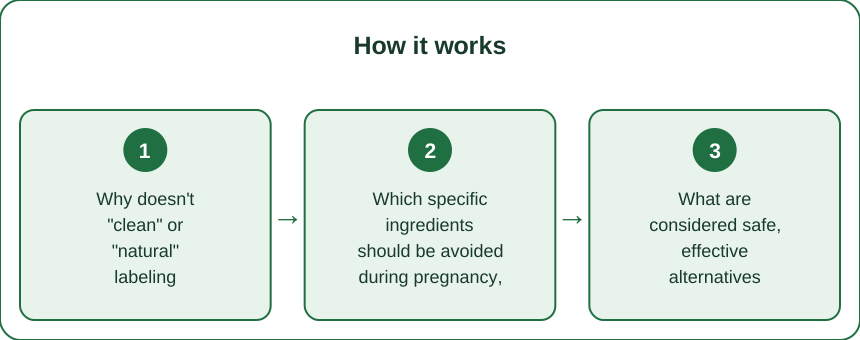
Why doesn’t “clean” or “natural” labeling guarantee pregnancy safety?
Clean beauty standards are built around avoiding certain synthetic ingredients (parabens, sulfates, certain preservatives), not around pregnancy safety specifically. Several ingredients considered perfectly “clean” — including some essential oils and natural retinol alternatives — still carry pregnancy-specific cautions that clean labeling doesn’t address at all.
Which specific ingredients should be avoided during pregnancy, clean or not?
Retinoids (retinol, tretinoin, retinyl palmitate) and high-concentration salicylic acid are the most commonly flagged for avoidance, along with hydroquinone and certain essential oils in concentrated form (like rosemary or clary sage in undiluted formulations). These recommendations come from obstetric guidance, independent of any clean-beauty framework.
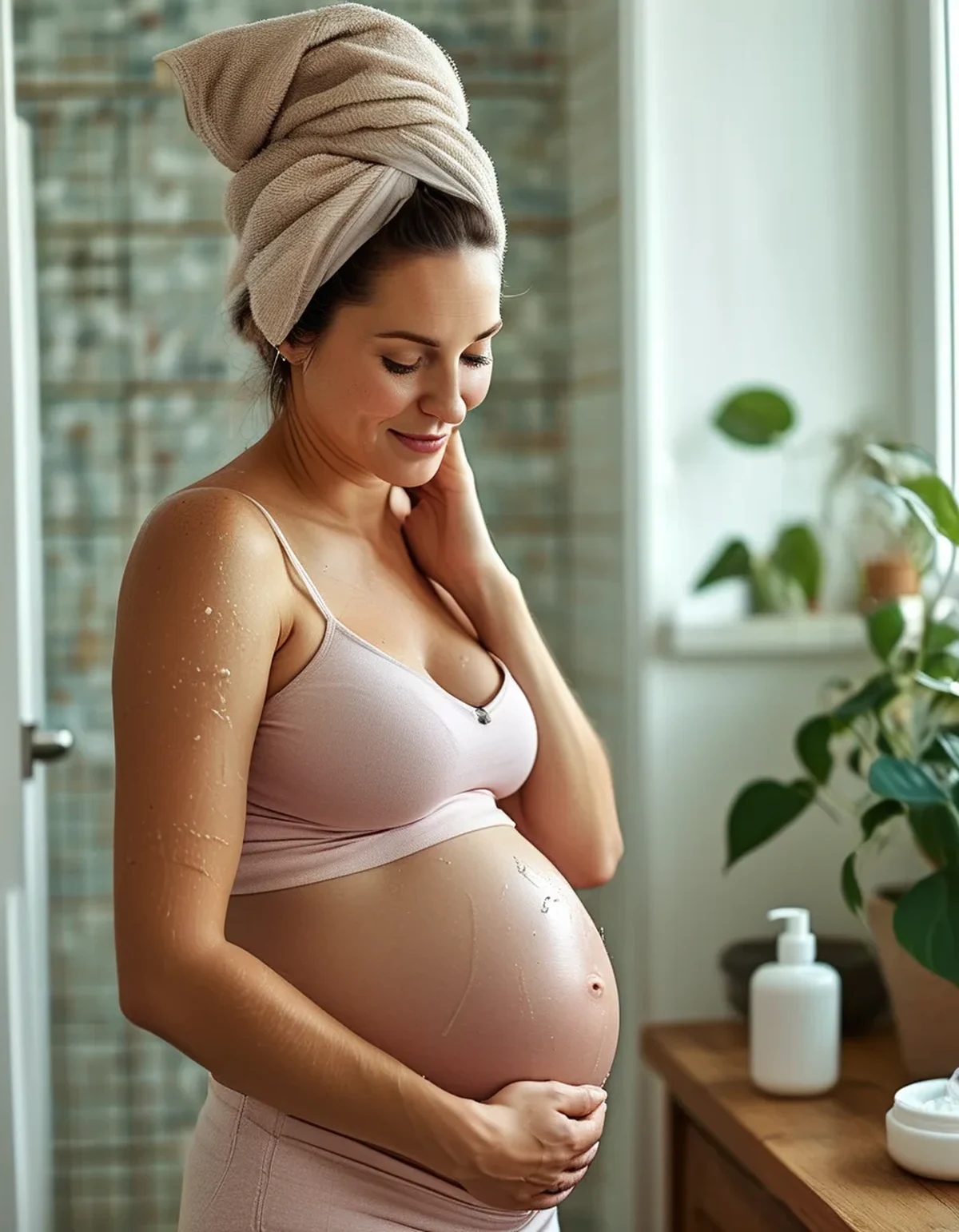
What are considered safe, effective alternatives during pregnancy?
Vitamin C, niacinamide, hyaluronic acid, azelaic acid, and glycolic acid (in reasonable concentrations) are generally considered pregnancy-safe and address many of the same concerns (brightening, texture, mild exfoliation) that retinoids and higher-strength salicylic acid target.
Myth vs Fact: Clean Beauty and Pregnancy
Myth: If it’s marketed as clean or natural, it’s automatically fine during pregnancy. Fact: Several “clean” or “natural” ingredients, including some essential oils, are specifically flagged for pregnancy caution — natural doesn’t mean automatically pregnancy-safe.
Myth: Synthetic ingredients are inherently riskier during pregnancy than natural ones. Fact: Some well-studied synthetic ingredients (like niacinamide) have clearer pregnancy-safety data than certain natural extracts that haven’t been studied as thoroughly in pregnant populations.
Myth: You need to throw out your entire routine once pregnant. Fact: Most routines only need a few specific swaps (typically retinoids and high-strength acids) — cleansers, moisturizers, and SPF usually don’t need to change at all.
FAQ: Clean Beauty and Pregnancy Questions, Answered
Is it safe to use sunscreen throughout pregnancy?
Yes — mineral sunscreens (zinc oxide, titanium dioxide) are generally considered a safe, often preferred choice during pregnancy, and consistent SPF use is still recommended.
Should you stop all acne treatments while pregnant?
Not necessarily — azelaic acid and lower-strength salicylic acid (under about 2%) are often considered acceptable options, but it’s worth confirming your specific routine with your OB, especially for anything beyond basic cleansing.
Do these ingredient cautions apply during breastfeeding too?
Some carry over (retinoids are generally still cautioned against), but the guidance isn’t identical to pregnancy — check with your doctor about your specific postpartum routine. This is general information, not medical advice.
TL;DR:
- Clean/natural labeling doesn’t indicate pregnancy safety — those are separate questions
- Retinoids, high-strength salicylic acid, hydroquinone, and some essential oils need pregnancy-specific caution
- Vitamin C, niacinamide, hyaluronic acid, and azelaic acid are generally safe alternatives
- Most routines only need a couple of targeted swaps, not a full overhaul
Always confirm any pregnancy skincare questions with your OB — this is general information, not medical advice.
Keep Reading
This article is for general informational and styling purposes only. Fit, sizing, and product availability may vary.