Why 'Natural' on a Clean Beauty Label Isn't the Safety Signal It's Marketed As
A natural label on a clean beauty product carries an implicit safety promise that the ingredient itself rarely backs up, since plenty of natural compounds are potent irritants or allergens while plenty of synthetic ones are extensively tested and mild. Here’s the actual gap between natural and safe, why the assumption persists anyway, and what to check instead of the word itself.
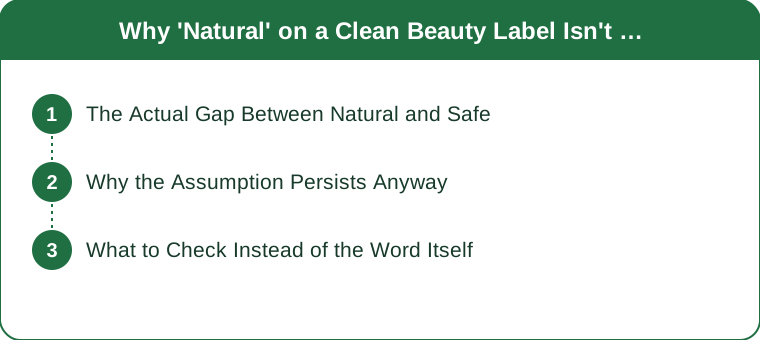
The Actual Gap Between Natural and Safe
The real disconnect: the the-many-common-plant-derived-ingredients-are-known-contact-allergens (the essential oils and plant extracts frequently marketed as gentle actually ranking among the most common causes of contact dermatitis in dermatology clinic data — the plant-derived-doesnt-correlate-with-low-irritation-potential-in-actual-clinical-data), the the-synthetic-ingredients-undergo-more-standardized-safety-testing-in-many-cases-than-natural-extracts-do (the many synthetic cosmetic ingredients having gone through extensive isolated safety testing, while a natural extract’s exact chemical composition can vary batch to batch and gets tested less precisely as a result — the the-testing-rigor-often-favors-synthetic-ingredients-over-variable-natural-extracts), and the reframe (the natural-versus-synthetic distinction not tracking meaningfully with actual measured skin safety at all).

Why the Assumption Persists Anyway
The marketing mechanism: the the-natural-is-an-unregulated-marketing-term-with-no-fixed-legal-definition (the the word carrying essentially no enforced regulatory meaning on a cosmetic label, leaving it free to be applied broadly regardless of actual formulation safety — the an-unregulated-term-can-be-applied-to-almost-anything-without-consequence), and the frame (the label term functioning as a marketing signal rather than a safety certification, which is exactly why it doesn’t reliably predict how a product will actually perform on skin).
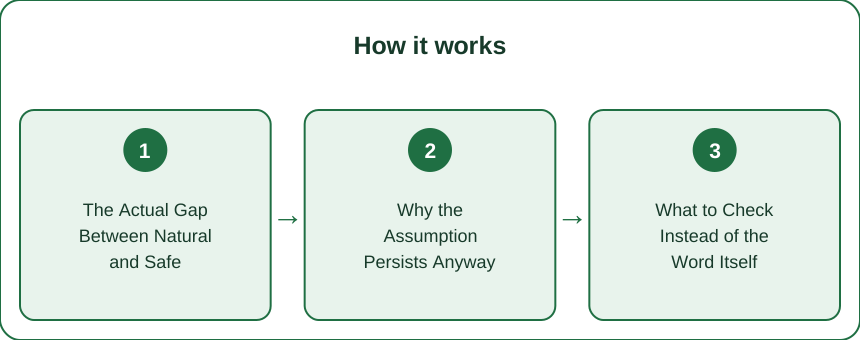
What to Check Instead of the Word Itself
The better checks: the the-check-for-a-specific-known-allergen-on-the-full-ingredient-list-regardless-of-natural-or-synthetic-origin (the scanning specifically for individually known irritants like certain essential oils or fragrance compounds by name, a far more useful check than the natural or synthetic framing on the front label — the checking-by-specific-ingredient-name-beats-checking-by-natural-versus-synthetic-framing), the the-patch-test-any-new-product-regardless-of-its-natural-marketing-per-patch-testing-new-products-properly-guides-standard-method (the applying the same patch-testing caution to a natural-labeled product as to any other new product, since the label itself predicts nothing about individual reaction risk — the patch-testing-applies-equally-regardless-of-what-the-front-label-claims), and the frame (the two real safety checks — scanning for specific known irritants and patch-testing — replacing the far less useful natural-or-not framing entirely).
A natural label doesn’t reliably predict skin safety, since plant-derived ingredients are among the more common causes of contact dermatitis while many synthetic ingredients carry more standardized safety testing behind them. The assumption persists mainly because natural is an unregulated marketing term with no enforced definition, free to be applied regardless of actual formulation. Checking a product for specific known irritants by name and patch-testing anything new — the same caution applied to any product regardless of marketing — are the checks that actually predict how skin will respond, in a way the natural label itself never does.
Keep Reading
This article is for general informational and styling purposes only. Fit, sizing, and product availability may vary.