How to Actually Read a Clean Beauty Ingredient Label (Without a Chemistry Degree)
Quick Answer: Ingredients are listed by concentration, highest to lowest, so the first five ingredients matter most. Checking those five against a short list of common concerns (fragrance, certain preservatives, specific alcohols) gives you a fast, reliable read without needing to understand every unfamiliar chemical name.
You flip a bottle over, see a wall of unpronounceable ingredient names, and put it back on the shelf out of sheer overwhelm. Here’s the good news: you only really need to understand a handful of rules to read any label with confidence.
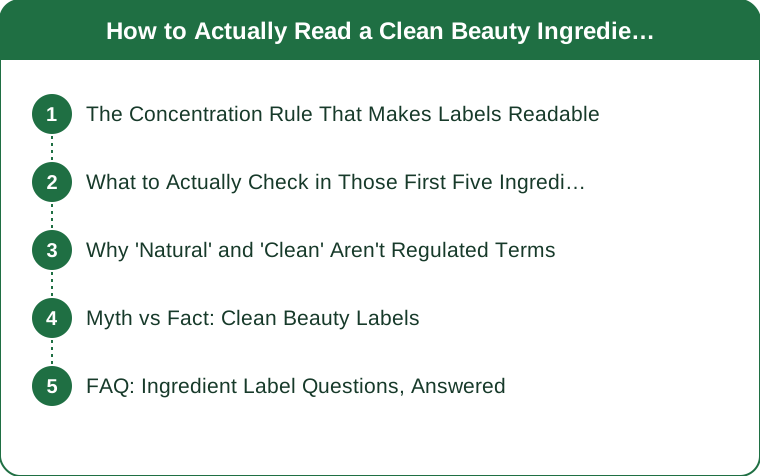
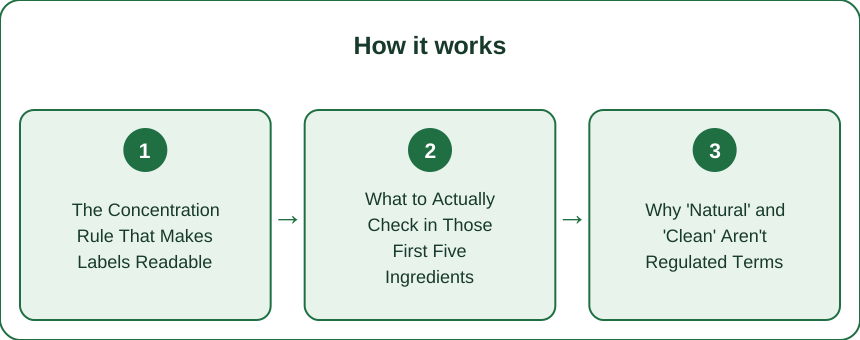
The Concentration Rule That Makes Labels Readable
By regulation, ingredients are listed in descending order of concentration — the first ingredient is the most abundant, and anything below the halfway point of a long list is typically present in tiny, often negligible amounts. This single rule cuts the intimidation factor dramatically: you don’t need to evaluate all 30 ingredients, just the first 5-8, which make up the bulk of what’s actually in the product.
Water (often listed as ‘aqua’) is the most common first ingredient in many formulas and isn’t a red flag on its own — what matters more is what follows it near the top of the list.
What to Actually Check in Those First Five Ingredients
Fragrance or parfum, if it appears high on the list, is worth noting if you have sensitive skin, since ‘fragrance’ is a single listed term that can represent dozens of unlisted individual compounds. Certain alcohols matter here too — ‘alcohol denat’ high on a list can be drying, while fatty alcohols like cetyl or stearyl alcohol (despite the similar name) are actually moisturizing and not a concern.
This distinction — that not all ingredients with similar-sounding names function the same way — is exactly why blanket ‘avoid all X’ rules tend to be less useful than checking the specific ingredient and its actual function.
Why ‘Natural’ and ‘Clean’ Aren’t Regulated Terms
In the US, terms like ‘clean,’ ‘natural,’ and ‘non-toxic’ on packaging are not legally regulated definitions — brands can use them based on their own internal standards, which vary widely. This is why the ingredient list itself, not the front-of-package marketing claims, is the reliable source of information.
A product marketed heavily as ‘clean’ can still contain the exact same preservatives or synthetic ingredients as an unmarketed product — the label claim tells you about branding strategy, not necessarily formulation.
Myth vs Fact: Clean Beauty Labels
Myth: A long ingredient list always means a lower-quality product. Fact: complex, well-formulated products often have longer lists because they include supporting ingredients (stabilizers, pH adjusters) that make the active ingredients work properly.
Myth: All preservatives are harmful and should be avoided. Fact: preservatives prevent bacterial and mold growth in water-based products — avoiding them entirely creates a real safety risk, not a benefit.
Myth: If you can’t pronounce it, it’s automatically bad. Fact: many completely benign, well-studied ingredients (like tocopherol, which is vitamin E) have unfamiliar scientific names that sound alarming but aren’t.
FAQ: Ingredient Label Questions, Answered
What’s the fastest way to check an ingredient I don’t recognize?
Apps like INCI Decoder or EWG’s Skin Deep database let you search individual ingredient names quickly and explain their function and any documented concerns.
Should I avoid all products with ‘fragrance’ listed?
Not necessarily — only if you have known fragrance sensitivity or reactive skin; for most people, fragrance in a well-formulated product at typical concentrations isn’t a significant concern.
Are natural ingredients automatically safer than synthetic ones?
No — safety depends on the specific ingredient and concentration, not whether it’s naturally derived or synthetically produced; some natural ingredients (certain essential oils, for example) are actually more likely to cause irritation than synthetic alternatives.
TL;DR:
- Ingredients are listed by concentration — focus on the first 5-8, not the whole list
- Check specifically for fragrance and denatured alcohol if you have sensitive skin; fatty alcohols aren’t the same concern
- ‘Clean’ and ‘natural’ aren’t regulated terms — the ingredient list is the real source of information
- A long list isn’t automatically bad, and an unfamiliar name isn’t automatically a red flag
Once you know to focus on the first several ingredients and check a short list of specific concerns, reading any label takes under a minute — no chemistry background required.
Keep Reading
This article is for general informational and styling purposes only. Fit, sizing, and product availability may vary.